
Speaking Lab
Image-based speaking practice with useful phrases, pronunciation focus and model response.
Lesson objectives
- Describe, compare and speculate more naturally under speaking-task pressure.
- Use useful phrases with better rhythm, stress and connected speech.
- Respond to image prompts connected to fashion, identity & sustainability with C1-level range.
Listen to the model audio before you answer the lesson tasks.
Speaking — describe & compare
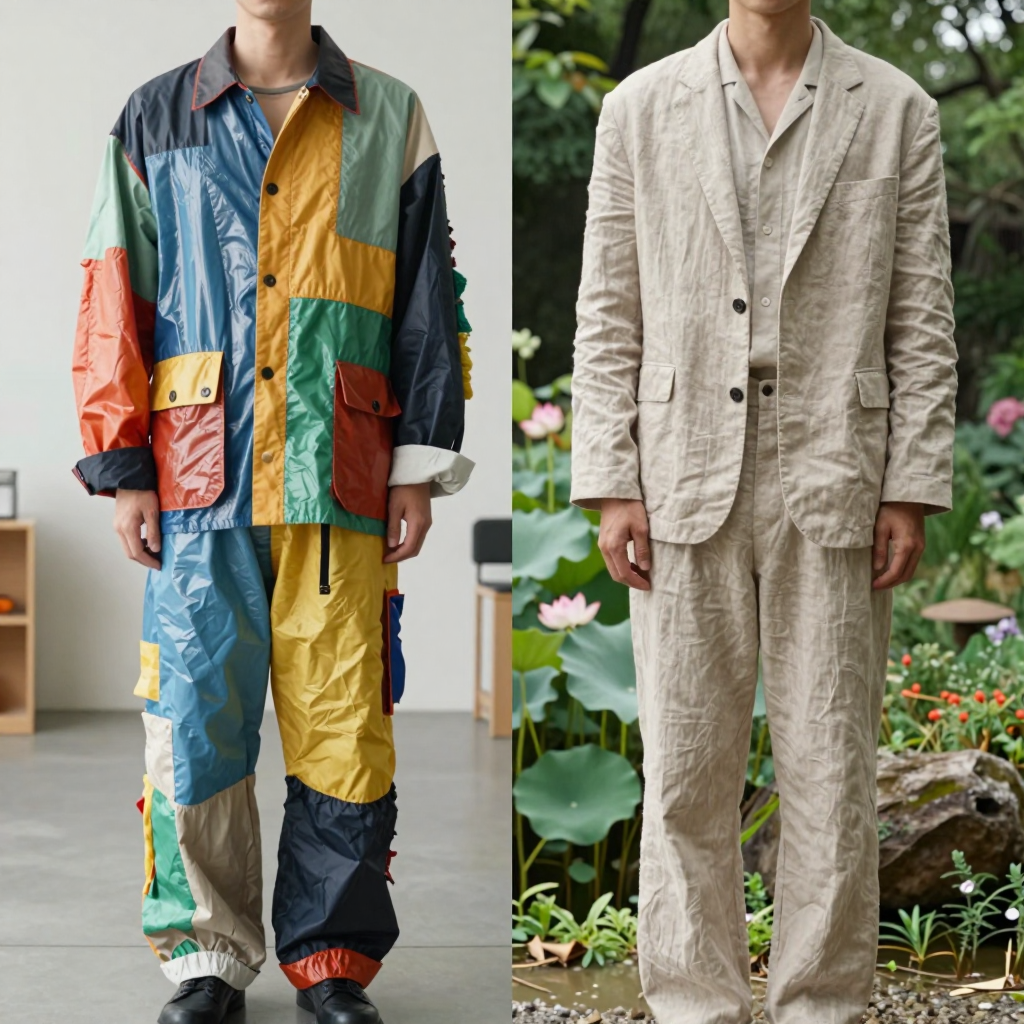
Compara estas dos imágenes. En tu respuesta, debes describir las diferencias en cuanto a estilo y materiales, y responder a la pregunta: ¿Cómo crees que la ropa que elegimos influye en la percepción de nuestra identidad?
🖼️ 
Useful phrases
- At first glance, it appears that... — A primera vista, parece que... 🔊
- In stark contrast to the first image... — En marcado contraste con la primera imagen... 🔊
- The two scenes depict vastly different approaches to... — Las dos escenas representan enfoques muy distintos hacia... 🔊
- One could argue that the clothing reflects... — Se podría argumentar que la ropa refleja... 🔊
- There is a palpable sense of... — Hay una sensación palpable de... 🔊
- It is highly likely that the wearer intends to... — Es muy probable que quien lo lleva tenga la intención de... 🔊
- While the former focuses on..., the latter emphasizes... — Mientras que el primero se centra en..., el segundo enfatiza... 🔊
- The aesthetic choices suggest a tendency towards... — Las elecciones estéticas sugieren una tendencia hacia... 🔊
- It might be inferred that... — Se podría inferir que... 🔊
- The juxtaposition of these two styles highlights... — La yuxtaposición de estos dos estilos resalta... 🔊
- They both seem to grapple with the concept of... — Ambos parecen lidiar con el concepto de... 🔊
- Judging by the visual cues, it seems... — A juzgar por las pistas visuales, parece... 🔊
Pronunciación
Presta atención a la pronunciación de la 's' inicial en palabras como 'style' o 'studio' (no añadas un sonido de 'e' al principio) y la 't' muda en 'aesthetic'. Practica también la distinción entre la pronunciación de 'clothes' /kləʊðz/ y 'cloth' /klɒθ/ para evitar confusiones de vocabulario.
Model answer
🔊
Both images present fascinatingly different perspectives on fashion and identity. At first glance, the left-hand image depicts a person wearing an avant-garde, colourful outfit that seems to be crafted from upcycled materials. This suggests a bold, experimental approach to sustainability, where identity is expressed through creativity and environmental consciousness. In stark contrast, the right-hand image shows a much more minimalist aesthetic. The person is wearing high-quality, neutral-toned linen, which evokes a sense of timelessness and organic elegance. While the former focuses on making a loud, visual statement, the latter emphasises subtle sophistication and a connection to nature.
Regarding the question of identity, I believe our clothing serves as a non-verbal language. In the first case, the wearer might be using fashion as a tool for activism, projecting an identity of innovation and ecological responsibility. On the other hand, the second individual seems to value longevity and simplicity, perhaps reflecting a more tranquil or grounded persona. Ultimately, whether through radical upcycling or minimalist staples, our sartorial choices are deeply intertwined with how we wish to be perceived by society and how we understand our own values.