
Speaking Lab
Image-based speaking practice with useful phrases, pronunciation focus and model response.
Lesson objectives
- Describe, compare and speculate more naturally under speaking-task pressure.
- Use useful phrases with better rhythm, stress and connected speech.
- Respond to image prompts connected to labour law, unions & workers' rights with C1-level range.
Listen to the model audio before you answer the lesson tasks.
Speaking — describe & compare
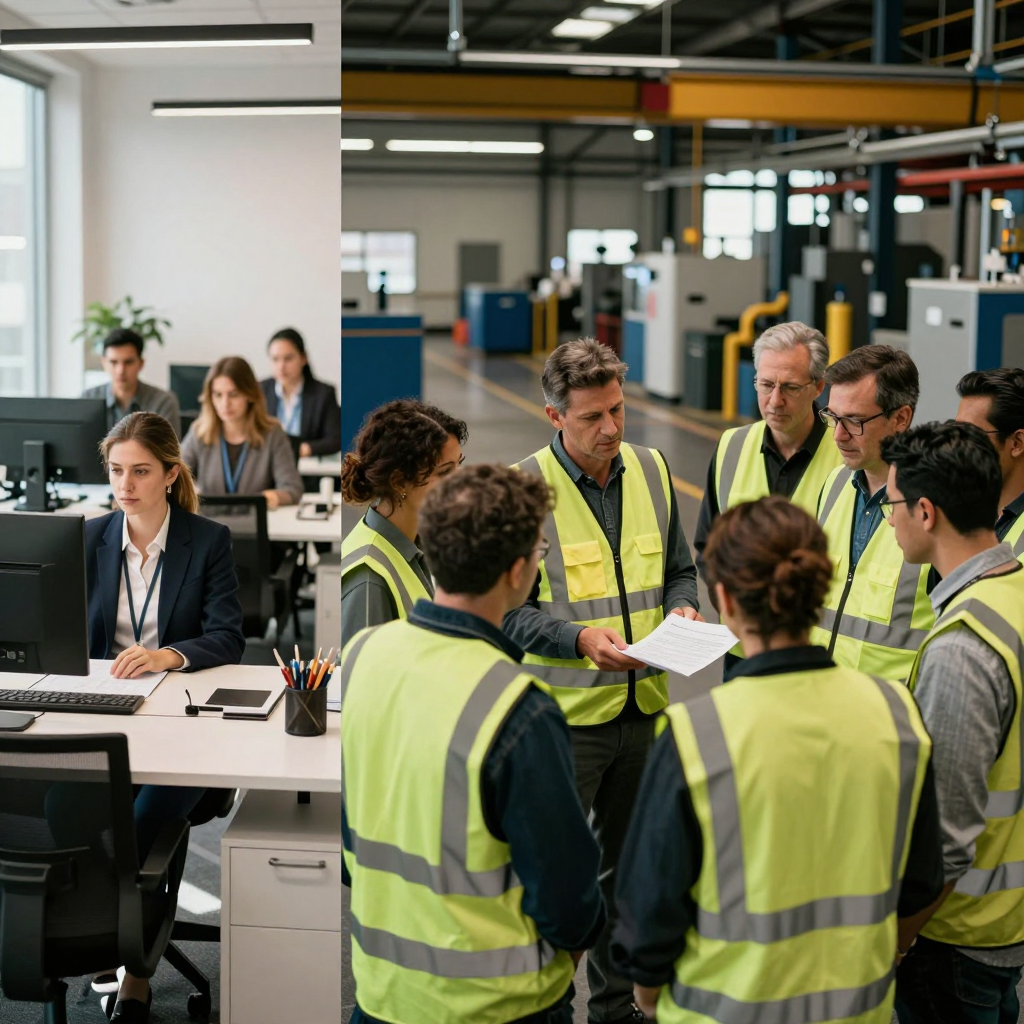
Compara estas dos imágenes. En tu respuesta, debes describir las diferencias en los entornos laborales y contrastar las dinámicas de grupo. Habla durante 2 minutos.
🖼️ 
Useful phrases
- In the former image, we can observe... — En la primera imagen, podemos observar... 🔊
- Conversely, the second picture depicts... — Por el contrario, la segunda imagen representa... 🔊
- While the first scene suggests autonomy, the second implies... — Mientras que la primera escena sugiere autonomía, la segunda implica... 🔊
- It is highly probable that they are discussing... — Es muy probable que estén discutiendo... 🔊
- The atmosphere appears to be significantly more... — El ambiente parece ser significativamente más... 🔊
- One could argue that the workers are... — Se podría argumentar que los trabajadores están... 🔊
- There is a striking contrast between... — Hay un contraste llamativo entre... 🔊
- The setting seems to reflect a shift towards... — El entorno parece reflejar un cambio hacia... 🔊
- Judging by their body language, it looks as if... — A juzgar por su lenguaje corporal, parece como si... 🔊
- The first image conveys a sense of... — La primera imagen transmite una sensación de... 🔊
- In stark contrast to the corporate setting... — En marcado contraste con el entorno corporativo... 🔊
- It is worth noting that... — Cabe destacar que... 🔊
Pronunciación
Presta atención a la pronunciación de la 's' inicial en palabras como 'status' o 'strategy' (no añadas un sonido de 'e' al principio) y la pronunciación de la terminación '-ed' en verbos regulares como 'discussed' (/d/) o 'observed' (/d/).
Model answer
🔊
Both images depict professional environments, yet they convey vastly different social dynamics. In the former, we see a contemporary corporate office where individuals are working in isolation at their own desks. The atmosphere seems quite sterile and individualistic, suggesting a focus on personal productivity and autonomy. In stark contrast, the second image depicts a group of industrial workers gathered closely in a factory setting. They appear to be engaged in a collective discussion, perhaps regarding labour rights or union negotiations. While the first scene is characterised by quiet, individual tasks, the second implies a much more collaborative and potentially contentious atmosphere. It is highly probable that the workers are discussing collective bargaining or workplace regulations, whereas the office workers are simply performing their daily duties. Judging by their body language, the workers in the second image seem more unified, whereas the corporate employees appear somewhat detached from one another. Ultimately, the images highlight the spectrum of modern labour, from the solitary nature of white-collar work to the collective solidarity often found in industrial sectors.