
Speaking Lab
Image-based speaking practice with useful phrases, pronunciation focus and model response.
Lesson objectives
- Describe, compare and speculate more naturally under speaking-task pressure.
- Use useful phrases with better rhythm, stress and connected speech.
- Respond to image prompts connected to electoral systems, voting & democracy with C1-level range.
Listen to the model audio before you answer the lesson tasks.
Speaking — describe & compare
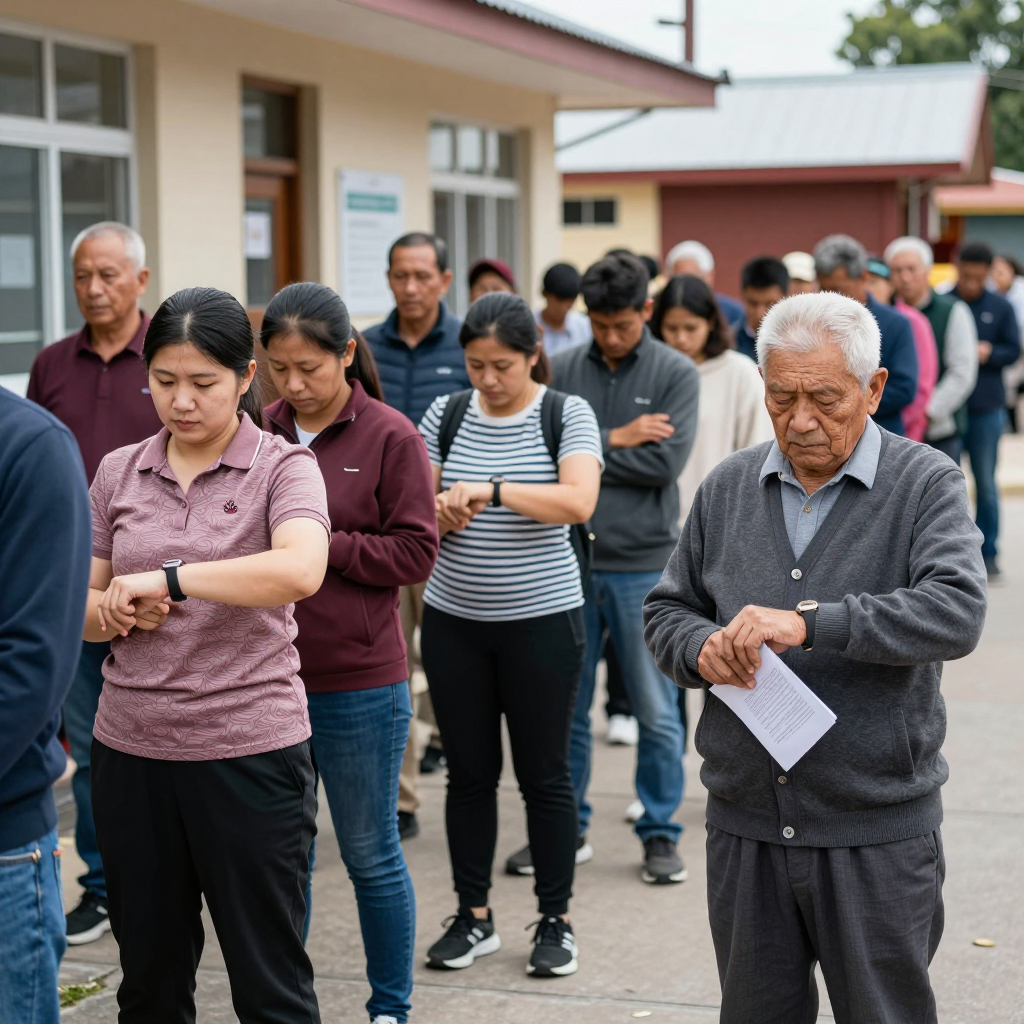
Compara las dos imágenes (la imagen principal y la que se te daría en el examen) centrándote en las diferentes formas de participación ciudadana. Debes hablar durante 1 minuto sobre la comparación y luego responder a una pregunta relacionada durante 1 minuto. En este ejercicio, practica la descripción comparativa durante 2 minutos.
🖼️ 
Useful phrases
- Judging by the setting, it appears that... — A juzgar por el entorno, parece que... 🔊
- While the first image depicts..., the second one conveys... — Mientras que la primera imagen representa..., la segunda transmite... 🔊
- There is a striking resemblance between... — Hay un parecido sorprendente entre... 🔊
- One could argue that the atmosphere is... — Se podría argumentar que el ambiente es... 🔊
- In stark contrast to the first scene, we see... — En marcado contraste con la primera escena, vemos... 🔊
- It is highly likely that they are... — Es muy probable que estén... 🔊
- The visual cues suggest a sense of... — Las pistas visuales sugieren un sentimiento de... 🔊
- Both images touch upon the theme of... — Ambas imágenes tocan el tema de... 🔊
- It might be inferred that... — Se podría inferir que... 🔊
- Whereas the former focuses on..., the latter highlights... — Mientras que el primero se centra en..., el segundo destaca... 🔊
- They both seem to evoke a feeling of... — Ambas parecen evocar un sentimiento de... 🔊
- The nuance between the two is... — El matiz entre las dos es... 🔊
Pronunciación
Para sonar más natural en el examen de Speaking, practica las contracciones (e.g., 'they're' en lugar de 'they are') y las reducciones (e.g., 'gonna' o 'wanna' en contextos informales, aunque en C1 es mejor usar 'should've' o 'could've' con fluidez). La clave es no pronunciar cada palabra de forma aislada, sino permitir que el ritmo de la frase fluya mediante el uso de 'connected speech'.
Model answer
🔊
In this image, we see a diverse group of citizens lined up outside a community centre, presumably to cast their votes. The atmosphere seems quite orderly and solemn, reflecting the importance of the democratic process. Judging by the expressions on their faces, there is a sense of civic duty, particularly in the elderly man in the foreground, who looks quite contemplative. While this scene depicts a traditional, physical way of participating in an election, one could imagine a contrasting image of people voting digitally from their homes. In the former, there is a tangible sense of community and shared purpose, whereas the latter might feel more isolated. Both scenarios, however, revolve around the fundamental right to have a voice in how society is governed. It is highly likely that the people in the queue are reflecting on the impact of their choice. The visual cues suggest a quiet determination, highlighting that despite the modern era, the physical act of voting remains a significant ritual in many cultures. Ultimately, both the queue and the individual act of voting represent the backbone of a functioning democracy.