
Speaking Lab
Image-based speaking practice with useful phrases, pronunciation focus and model response.
Lesson objectives
- Describe, compare and speculate more naturally under speaking-task pressure.
- Use useful phrases with better rhythm, stress and connected speech.
- Respond to image prompts connected to palliative care, death & dying conversations with C1-level range.
Listen to the model audio before you answer the lesson tasks.
Speaking — describe & compare
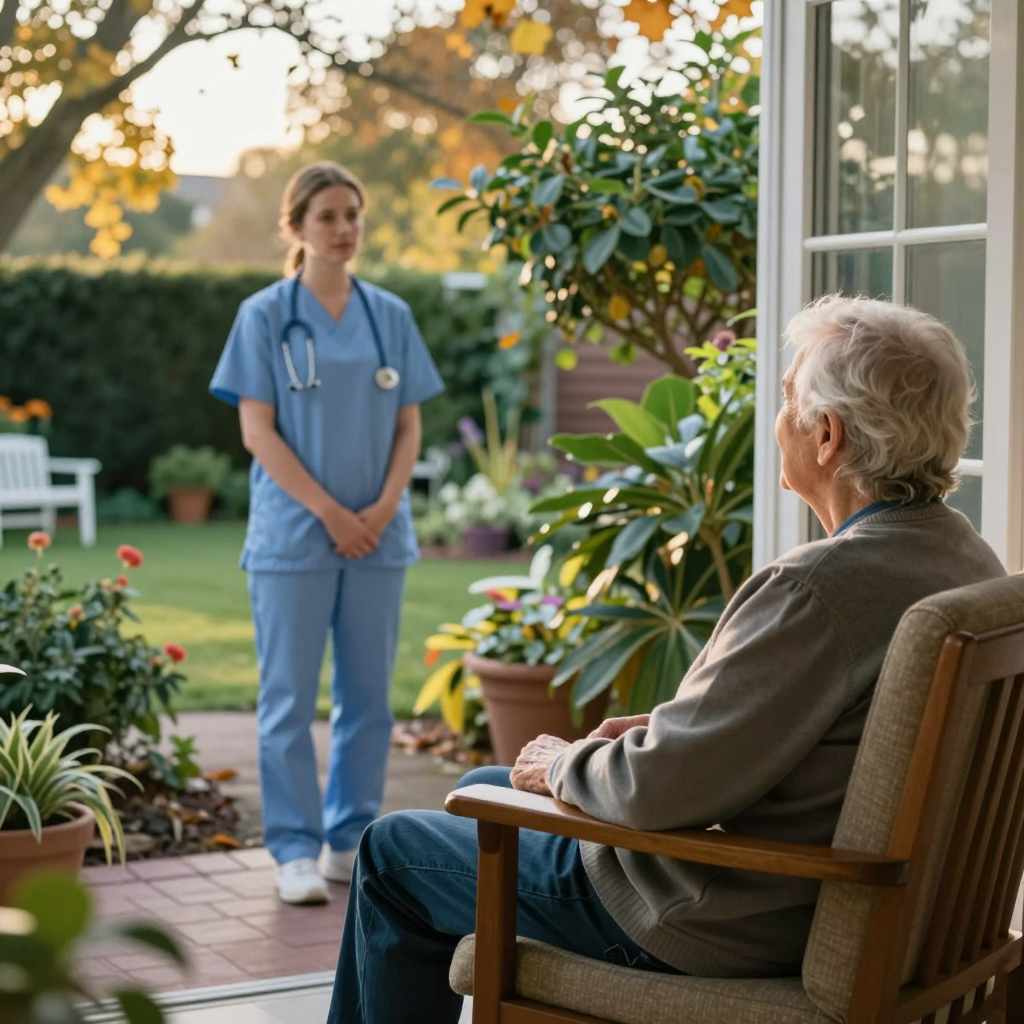
Compara estas dos imágenes. En ambas imágenes vemos situaciones relacionadas con el cuidado paliativo y el final de la vida. Describe las diferencias y similitudes, y especula sobre lo que podría estar ocurriendo o cómo se sienten las personas. Debes hablar durante 1 minuto de forma continua.
🖼️ 
Useful phrases
- It appears as though the subject is... — Parece como si el sujeto estuviera... 🔊
- One could infer from the atmosphere that... — Se podría inferir por el ambiente que... 🔊
- In stark contrast to the first scene, this one... — En marcado contraste con la primera escena, esta... 🔊
- There is a sense of profound tranquility in... — Hay una sensación de profunda tranquilidad en... 🔊
- It is highly likely that they are reflecting on... — Es muy probable que estén reflexionando sobre... 🔊
- The visual cues suggest a feeling of... — Las pistas visuales sugieren un sentimiento de... 🔊
- While the first image depicts..., the second shows... — Mientras que la primera imagen representa..., la segunda muestra... 🔊
- One might assume that the relationship is... — Uno podría asumir que la relación es... 🔊
- The lighting serves to underscore the... — La iluminación sirve para enfatizar el... 🔊
- It's hard to tell for certain, but it seems... — Es difícil saberlo con certeza, pero parece... 🔊
- Both images touch upon the theme of... — Ambas imágenes tocan el tema de... 🔊
- The composition draws attention to... — La composición atrae la atención hacia... 🔊
Pronunciación
Para sonar más natural en el examen, presta atención al sonido schwa /ə/. Este es el sonido más común en inglés y ocurre en sílabas que no están acentuadas (como la 'a' en 'about' o la 'e' en 'teacher'). En lugar de pronunciar cada vocal de forma clara y fuerte, relaja la lengua y produce un sonido neutro y corto. Practica con palabras como 'palliative' /'pæl.i.ə.tɪv/ o 'atmosphere' /'æt.mə.sfɪər/ para evitar que el habla suene robótica.
Model answer
🔊
Both images capture poignant moments related to end-of-life care, though they focus on different aspects of the experience. In the first image, we see a quiet, solitary moment of reflection. An elderly individual is seated in a garden, appearing to be lost in thought. The atmosphere is one of profound tranquility, suggesting a peaceful acceptance of their circumstances. It appears as though they are finding solace in nature during their final days.
In stark contrast, the second scene introduces a human connection through the presence of a caregiver. While the setting remains calm, the focus shifts to the relationship between the patient and the nurse. The nurse's expression is one of empathy and quiet support, which suggests that while the situation is somber, it is also handled with great dignity. One could infer that the nurse is providing not just medical assistance, but emotional companionship.
Ultimately, while the first image highlights the personal, internal journey of facing mortality, the second underscores the importance of compassionate care. Both images effectively convey a sense of stillness, illustrating how palliative care aims to provide comfort and peace to both the individual and those supporting them.