
Speaking Lab
Image-based speaking practice with useful phrases, pronunciation focus and model response.
Lesson objectives
- Describe, compare and speculate more naturally under speaking-task pressure.
- Use useful phrases with better rhythm, stress and connected speech.
- Respond to image prompts connected to poetry, metaphor & literary language with C1-level range.
Listen to the model audio before you answer the lesson tasks.
Speaking — describe & compare
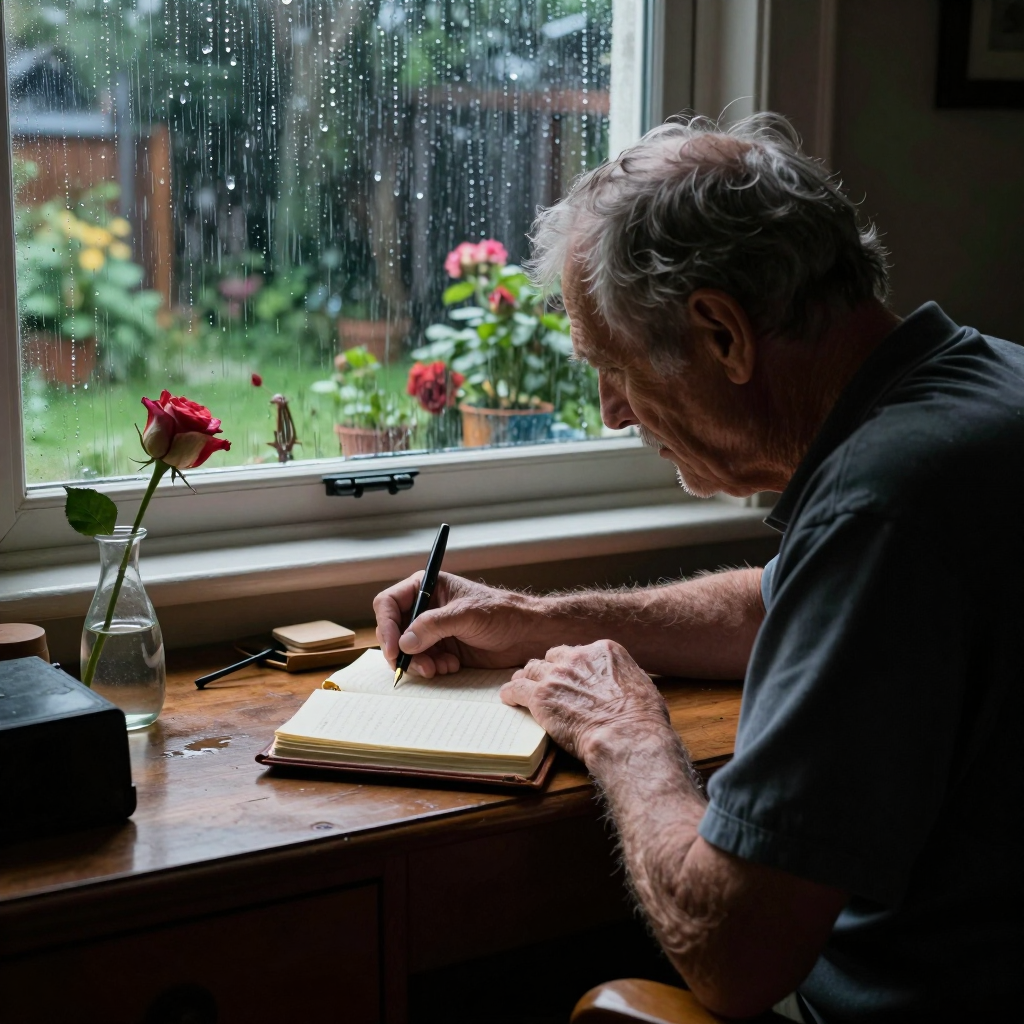
Compara estas dos imágenes. En la primera, describe la atmósfera y lo que el personaje parece estar experimentando. En la segunda, analiza cómo el entorno refleja su estado de ánimo. Debes hablar durante 2 minutos, comparando los temas de soledad, creatividad y el paso del tiempo. No te limites a describir; especula sobre las conexiones emocionales y utiliza lenguaje literario.
🖼️ 
Useful phrases
- It strikes me that the atmosphere is... — Me da la impresión de que el ambiente es... 🔊
- The scene could be interpreted as a metaphor for... — La escena podría interpretarse como una metáfora de... 🔊
- There is a palpable sense of... — Hay una sensación palpable de... 🔊
- In stark contrast to the first image... — En marcado contraste con la primera imagen... 🔊
- The lighting serves to underscore the... — La iluminación sirve para subrayar el/la... 🔊
- One might surmise that... — Uno podría suponer que... 🔊
- The composition evokes a feeling of... — La composición evoca un sentimiento de... 🔊
- It is highly probable that... — Es muy probable que... 🔊
- The juxtaposition of X and Y suggests... — La yuxtaposición de X e Y sugiere... 🔊
- The imagery is reminiscent of... — Las imágenes recuerdan a... 🔊
- It seems to me that the subject is... — Me parece que el sujeto está... 🔊
- This element acts as a symbol of... — Este elemento actúa como un símbolo de... 🔊
Pronunciación
En el inglés británico, la 'glottal stop' (detención glotal) ocurre cuando el sonido de la /t/ se bloquea en la garganta en lugar de pronunciarse con la lengua. En un nivel C1, es común escucharla en palabras como 'button' o 'water' en contextos informales o ciertos acentos. Sin embargo, para el examen de Cambridge, debes tener cuidado de no abusar de ella. Úsala de forma natural en palabras donde la /t/ esté al final de una sílaba, pero evita reemplazar todas las /t/ intervocálicas para mantener la claridad y el registro formal requerido.
Model answer
🔊
Both images capture moments of introspection, yet they differ significantly in their emotional weight. In the first image, we see an elderly man engaged in the act of writing. The cluttered desk and the wilting rose could be interpreted as a metaphor for the fleeting nature of life and the preservation of memories through literature. There is a palpable sense of melancholy, as if he is trying to capture something ephemeral before it vanishes. The lighting, which is quite moody, serves to underscore the isolation of the character.
In stark contrast, if we were to compare this to a more modern setting, the focus here remains purely on the internal struggle of the creator. The juxtaposition of the decaying flower and the sharp nib of the fountain pen suggests a tension between mortality and the immortality of the written word. One might surmise that the rain outside acts as a veil, separating his private world from the external reality. Ultimately, the scene is reminiscent of a classic poem, where the environment is not just a backdrop but a reflection of the soul's quiet turbulence. It is a poignant depiction of solitude and the timeless pursuit of expression.