
Speaking Lab
Image-based speaking practice with useful phrases, pronunciation focus and model response.
Lesson objectives
- Describe, compare and speculate more naturally under speaking-task pressure.
- Use useful phrases with better rhythm, stress and connected speech.
- Respond to image prompts connected to travel, culture & identity with C1-level range.
Listen to the model audio before you answer the lesson tasks.
Speaking — describe & compare
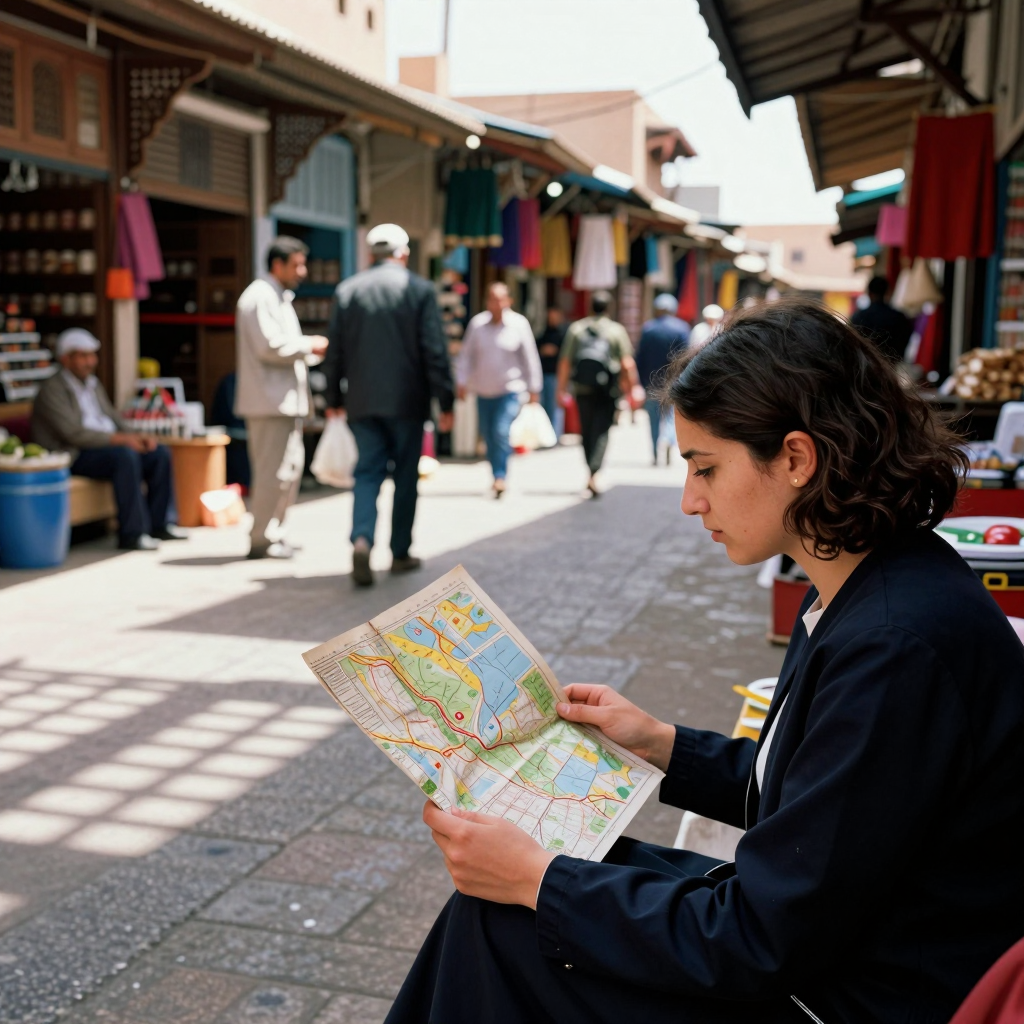
Compara las dos imágenes (la imagen generada y una imaginaria de un turista en una ciudad tecnológica moderna). Describe las similitudes y las diferencias, y comenta qué sentimientos o ideas transmiten las imágenes sobre el concepto de viajar y la identidad cultural. Debes hablar durante 2 minutos.
🖼️ 
Useful phrases
- It appears to me that the subject is... — Me parece que el sujeto está... 🔊
- One striking difference between the two scenes is... — Una diferencia llamativa entre las dos escenas es... 🔊
- The atmosphere seems to be somewhat... — El ambiente parece ser algo... 🔊
- In stark contrast to the first image, this one... — En marcado contraste con la primera imagen, esta... 🔊
- There is a sense of immersion in the local culture. — Hay una sensación de inmersión en la cultura local. 🔊
- The setting suggests a much more traditional way of life. — El entorno sugiere una forma de vida mucho más tradicional. 🔊
- It could be argued that the traveller is seeking... — Se podría argumentar que el viajero está buscando... 🔊
- The composition of the photo highlights... — La composición de la foto resalta... 🔊
- While the first image is quite vibrant, the second is... — Mientras que la primera imagen es bastante vibrante, la segunda es... 🔊
- The traveller seems to be lost in thought regarding... — El viajero parece estar absorto en sus pensamientos respecto a... 🔊
- This evokes a feeling of solitude amidst the crowd. — Esto evoca un sentimiento de soledad en medio de la multitud. 🔊
- Judging by her expression, she might be feeling... — A juzgar por su expresión, ella podría estar sintiéndose... 🔊
Pronunciación
Presta atención a las letras mudas (silent letters) en palabras comunes de este tema como 'island' (/ˈaɪ.lənd/) o 'climb' (/klaɪm/). Además, practica la pronunciación de 'culture' (/ˈkʌl.tʃər/) para evitar añadir una vocal extra al final, y asegúrate de que la 't' en 'identity' sea clara pero natural.
Model answer
🔊
In this first image, we see a young woman deeply immersed in a traditional Moroccan market, seemingly lost in thought while consulting a paper map. The atmosphere feels incredibly authentic, with the warm sunlight filtering through the wooden slats creating a sense of timelessness. It appears to me that she is seeking a genuine connection with the local culture, rather than just being a passive observer.
In stark contrast, if we were to compare this to a scene of a tourist in a high-tech, modern city, the vibe would be entirely different. While the modern setting might offer convenience and efficiency, it often lacks the sensory richness seen here. In the market scene, there is a palpable sense of history and tradition that shapes the traveller's identity through discovery.
One striking difference is the level of engagement with the surroundings; here, the traveller is physically and mentally present in an ancient environment. While the modern traveller might rely heavily on digital tools, this woman's use of a paper map suggests a more deliberate, perhaps more challenging, way of navigating a new culture. Ultimately, the image evokes a feeling of quiet contemplation amidst the bustling, vibrant chaos of the marketplace.