
Speaking Lab
Image-based speaking practice with useful phrases, pronunciation focus and model response.
Lesson objectives
- Describe, compare and speculate more naturally under speaking-task pressure.
- Use useful phrases with better rhythm, stress and connected speech.
- Respond to image prompts connected to chronic illness & quality of life with C1-level range.
Listen to the model audio before you answer the lesson tasks.
Speaking — describe & compare
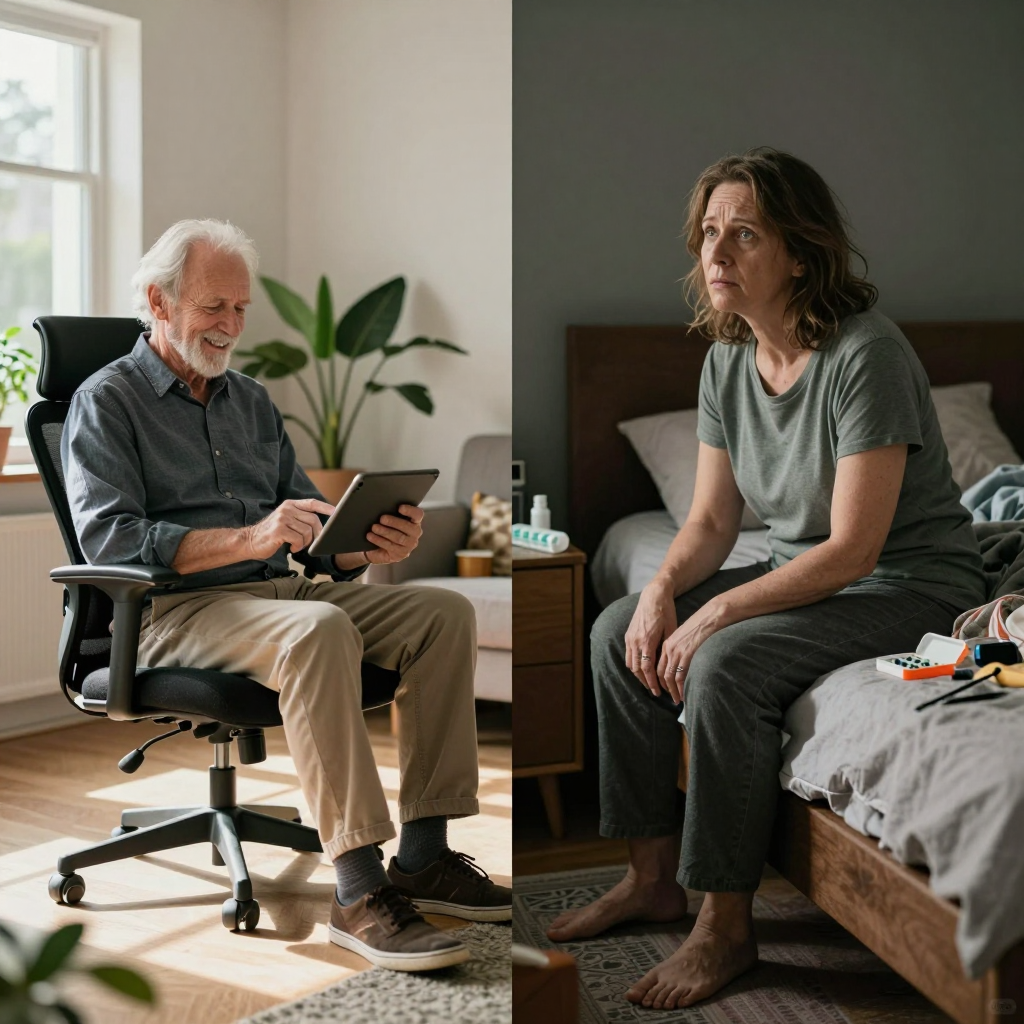
Compara estas dos imágenes. En tu respuesta, deberás describir las diferencias en el estilo de vida y el bienestar, y responder a la pregunta: ¿Cómo influye la gestión de una enfermedad crónica en la calidad de vida diaria de las personas?
🖼️ 
Useful phrases
- In the former image, we can see... — En la primera imagen, podemos ver... 🔊
- Conversely, the second picture depicts... — Por el contrario, la segunda imagen representa... 🔊
- While the first scene conveys a sense of... — Mientras que la primera escena transmite una sensación de... 🔊
- There is a striking contrast between... — Hay un contraste impactante entre... 🔊
- It is highly likely that... — Es muy probable que... 🔊
- One might infer that... — Uno podría inferir que... 🔊
- The atmosphere seems to be... — El ambiente parece ser... 🔊
- It could be argued that... — Se podría argumentar que... 🔊
- This stands in stark contrast to... — Esto contrasta fuertemente con... 🔊
- The visual cues suggest that... — Las pistas visuales sugieren que... 🔊
- Both images touch upon the theme of... — Ambas imágenes abordan el tema de... 🔊
- In terms of emotional well-being... — En cuanto al bienestar emocional... 🔊
Pronunciación
Para sonar más natural en el C1, presta atención a la 'vowel reduction' (reducción de vocales). En sílabas que no llevan el acento principal, las vocales suelen convertirse en un sonido neutro llamado 'schwa' /ə/. Por ejemplo, en la palabra 'about' o 'comparison', la primera vocal no es fuerte. Practica esto para evitar sonar demasiado robótico o marcar demasiado cada sílaba.
Model answer
🔊
Both images explore the multifaceted nature of living with chronic conditions, though they depict vastly different realities. In the former, we see an elderly gentleman who appears to have successfully integrated his health management into a vibrant lifestyle. He looks empowered, using technology to stay connected, which suggests that his quality of life remains high despite any underlying issues. Conversely, the second picture depicts a much more somber reality. The woman looks physically and emotionally drained, with the clutter and dim lighting suggesting that her illness might be overwhelming her daily routine. While the man seems to have found a balance, the woman appears to be struggling to maintain autonomy. Regarding the question of how chronic illness affects quality of life, I believe it is a spectrum. For some, like the man, proactive management and support can lead to a fulfilling life. However, for others, the physical burden and the mental toll of constant treatment can lead to isolation and exhaustion. Ultimately, the impact depends on whether the individual can maintain a sense of purpose and connection, or if the illness becomes the sole focus of their existence.