
Speaking Lab
Image-based speaking practice with useful phrases, pronunciation focus and model response.
Lesson objectives
- Describe, compare and speculate more naturally under speaking-task pressure.
- Use useful phrases with better rhythm, stress and connected speech.
- Respond to image prompts connected to film, auteur theory & critical analysis with C1-level range.
Listen to the model audio before you answer the lesson tasks.
Speaking — describe & compare
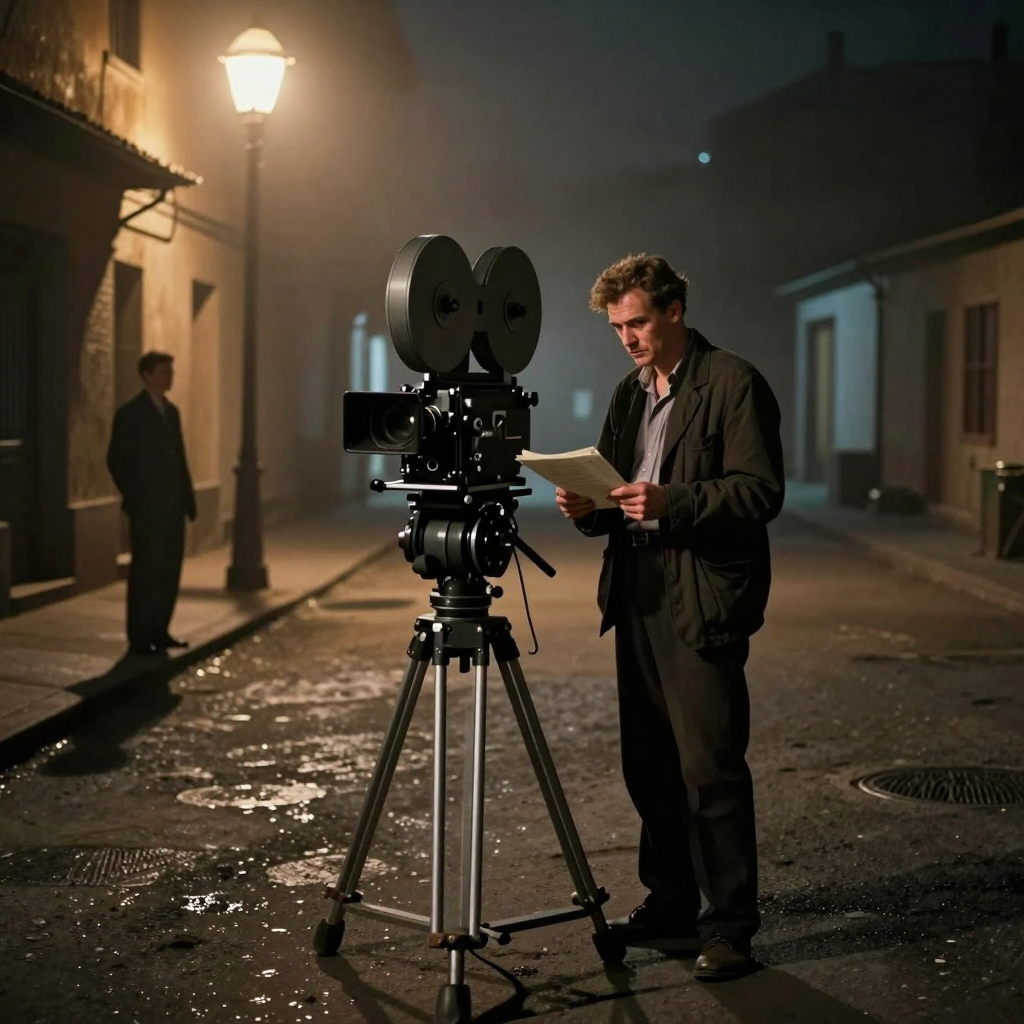
Compara estas dos imágenes. Describe las diferencias en cuanto a la atmósfera, el uso de la luz y la intención narrativa. Debes hablar durante 1 minuto sobre las similitudes y diferencias, y luego responder a una pregunta especulativa durante un minuto adicional. Total: 2 minutos.
🖼️ 
Useful phrases
- It appears to be a deliberate attempt to... — Parece ser un intento deliberado de... 🔊
- The composition suggests a sense of... — La composición sugiere una sensación de... 🔊
- In stark contrast to the first image... — En marcado contraste con la primera imagen... 🔊
- One could argue that the lighting conveys... — Se podría argumentar que la iluminación transmite... 🔊
- There is a palpable feeling of... — Hay una sensación palpable de... 🔊
- The visual elements are reminiscent of... — Los elementos visuales recuerdan a... 🔊
- It is highly likely that the director intended... — Es muy probable que el director pretendiera... 🔊
- The use of chiaroscuro serves to highlight... — El uso del claroscuro sirve para resaltar... 🔊
- While the first scene is quite static, the second... — Mientras que la primera escena es bastante estática, la segunda... 🔊
- The juxtaposition of light and shadow creates... — La yuxtaposición de luz y sombra crea... 🔊
- It might be interpreted as a metaphor for... — Podría interpretarse como una metáfora de... 🔊
- The overall aesthetic leans towards... — La estética general tiende hacia... 🔊
Pronunciación
Presta atención al acento prosódico (word stress) en palabras polisílabas complejas. En inglés, el acento suele recaer en una sola sílaba, lo que cambia el ritmo. Practica la diferencia entre 'cinematic' (/ˌsɪn.əˈmæt.ɪk/ - acento en la tercera sílaba) y 'director' (/daɪˈrek.tər/ - acento en la segunda sílaba). Evita poner el acento en la sílaba equivocada, ya que esto puede dificultar la comprensión en niveles avanzados.
Model answer
🔊
In this pair of images, we are presented with two distinct cinematic environments. The first image depicts a director working in a moody, noir-inspired setting. The use of chiaroscuro lighting is particularly striking, creating deep shadows that shroud the background, which suggests a sense of mystery or tension. The focus is entirely on the creative process, highlighting the 'auteur' element where the director's vision is paramount. In stark contrast, the second image—if we were to compare it to a more modern, bright setting—would lack this dramatic tension. Here, the composition suggests a solitary, almost introspective atmosphere. One could argue that the lighting is not merely functional but serves to highlight the isolation of the character. The visual elements are reminiscent of classic mid-century filmmaking, where every shadow tells a story. It is highly likely that the director intended to evoke a feeling of suspense through this high-contrast aesthetic. While the scene is static, the tension is palpable due to the way the light hits the script and the director's face. Ultimately, the image captures the essence of storytelling through visual manipulation, rather than through dialogue alone.