
Speaking Lab
Image-based speaking practice with useful phrases, pronunciation focus and model response.
Lesson objectives
- Describe, compare and speculate more naturally under speaking-task pressure.
- Use useful phrases with better rhythm, stress and connected speech.
- Respond to image prompts connected to wildlife conservation & rewilding with C1-level range.
Listen to the model audio before you answer the lesson tasks.
Speaking — describe & compare
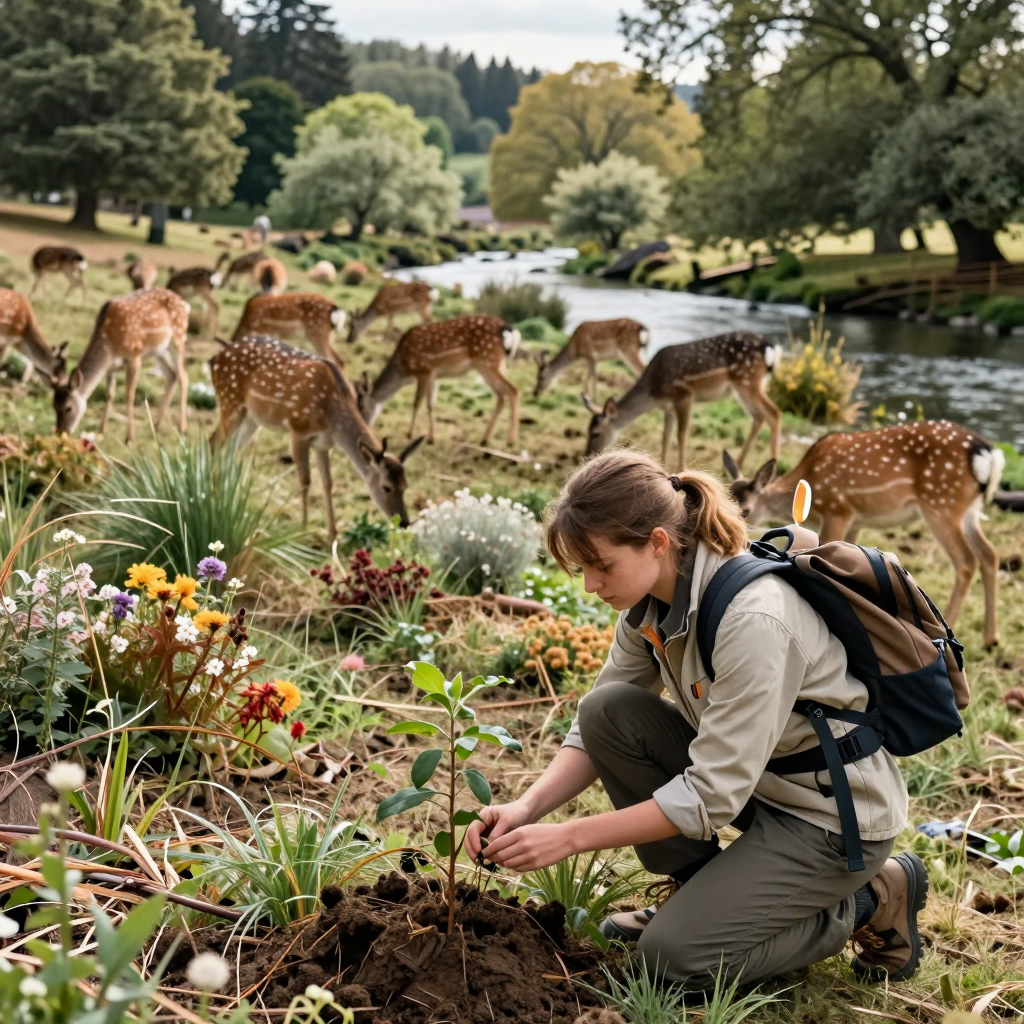
Compara estas dos imágenes. En la primera, observa la intervención humana directa en la conservación, mientras que en la segunda, el enfoque es la recuperación natural. Debes hablar durante 1 minuto comparando las imágenes y luego responder a una pregunta específica durante 1 minuto. Total: 2 minutos.
🖼️ 
Useful phrases
- It appears as though the biologist is monitoring... — Parece como si la bióloga estuviera monitoreando... 🔊
- One striking difference between the two scenes is... — Una diferencia impactante entre las dos escenas es... 🔊
- While the first image depicts active intervention, the second suggests... — Mientras que la primera imagen representa la intervención activa, la segunda sugiere... 🔊
- There's a sense of harmony between... — Hay una sensación de armonía entre... 🔊
- It's highly likely that the goal here is to... — Es muy probable que el objetivo aquí sea... 🔊
- The composition of the photo draws attention to... — La composición de la foto atrae la atención hacia... 🔊
- In stark contrast to the foreground, the background shows... — En marcado contraste con el primer plano, el fondo muestra... 🔊
- One could infer that the ecosystem is... — Se podría inferir que el ecosistema está... 🔊
- The image evokes a feeling of... — La imagen evoca un sentimiento de... 🔊
- Both photographs touch upon the theme of... — Ambas fotografías tocan el tema de... 🔊
- Judging by her expression, she seems to be... — A juzgar por su expresión, ella parece estar... 🔊
- The focus shifts from the human element to... — El enfoque cambia del elemento humano hacia... 🔊
Pronunciación
Cuidado con el acento tónico: en los sustantivos compuestos (compound nouns) como 'wildlife conservation', el énfasis suele recaer en la primera palabra. Sin embargo, en frases nominales más largas, el ritmo cambia. Practica la diferencia entre 'nature reserve' (énfasis en 'nature') y 'environmental protection' (ritmo más fluido).
Model answer
🔊
In these two images, we are presented with different facets of wildlife conservation. In the first photograph, the focus is clearly on direct human intervention. We see a biologist meticulously tending to a sapling, which suggests a hands-on approach to reforestation. The atmosphere feels purposeful and controlled. In contrast, the second scene—if we consider the background of the image—shows the result of such efforts: a rewilded landscape where animals like deer are roaming freely. While the foreground depicts the hard work of conservation, the background illustrates the ultimate goal of restoring natural habitats.
One striking difference is the level of interaction. In the first part, the human element is central, highlighting the necessity of scientific oversight. However, the broader scene suggests a shift towards letting nature take the lead once the groundwork is laid. It's highly likely that the biologist is monitoring the success of this specific planting. Ultimately, both images complement each other; one shows the deliberate act of planting, while the other captures the flourishing biodiversity that results from such dedicated environmental stewardship. It's a perfect representation of the balance between human effort and natural recovery.