
Speaking Lab
Image-based speaking practice with useful phrases, pronunciation focus and model response.
Lesson objectives
- Describe, compare and speculate more naturally under speaking-task pressure.
- Use useful phrases with better rhythm, stress and connected speech.
- Respond to image prompts connected to robotics & automation in industry with C1-level range.
Listen to the model audio before you answer the lesson tasks.
Speaking — describe & compare
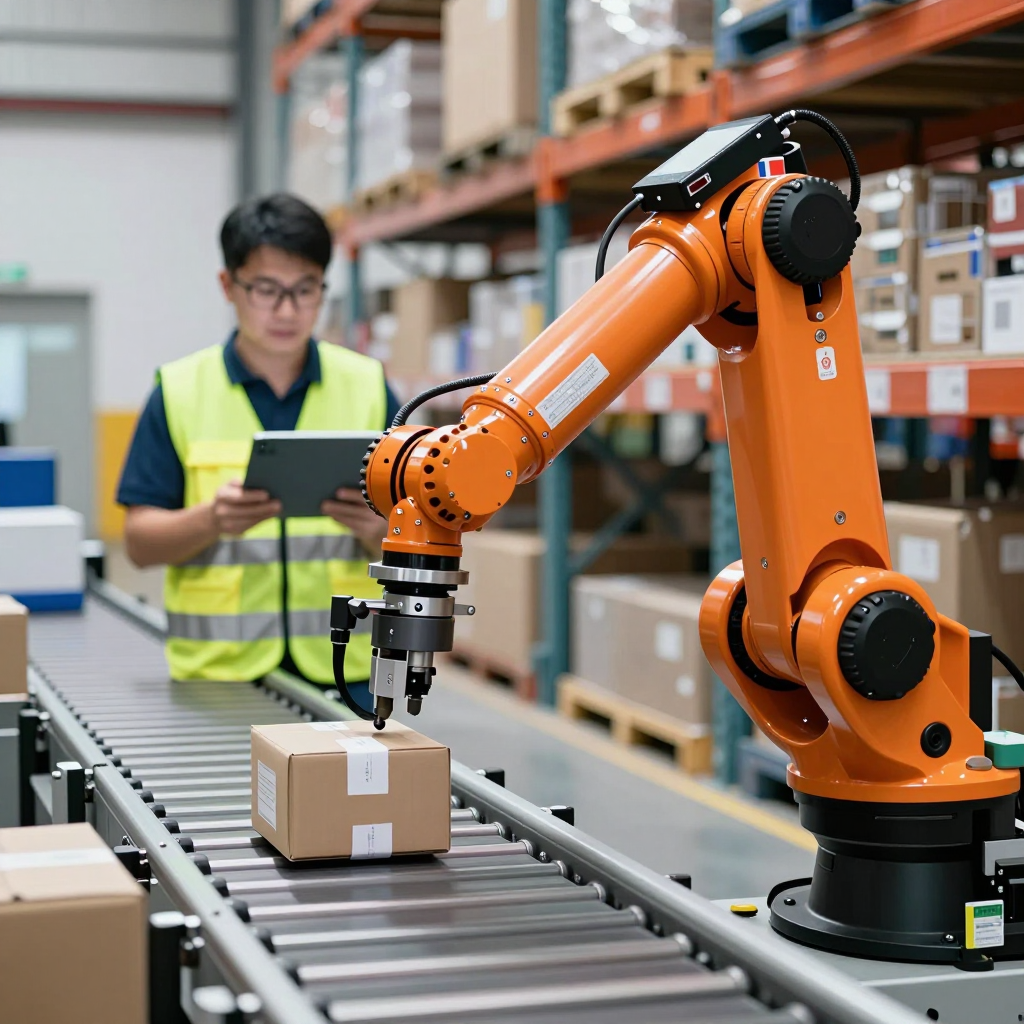
Mira las dos imágenes. Compara las dos fotografías y responde a la pregunta: ¿De qué manera la automatización está cambiando la naturaleza del trabajo humano? Debes hablar durante 1 minuto, y luego responder a una pregunta adicional. Este es el estilo de la Parte 2 del examen C1.
🖼️ 
Useful phrases
- It appears to me that... — Me parece que... 🔊
- One could argue that... — Se podría argumentar que... 🔊
- In stark contrast to the first image... — En marcado contraste con la primera imagen... 🔊
- The two scenes are somewhat analogous in that... — Las dos escenas son algo análogas en el sentido de que... 🔊
- It is highly likely that... — Es muy probable que... 🔊
- There is a sense of... — Hay una sensación de... 🔊
- While the first photo depicts..., the second shows... — Mientras que la primera foto representa..., la segunda muestra... 🔊
- It might be inferred that... — Se podría inferir que... 🔊
- The juxtaposition of X and Y suggests... — La yuxtaposición de X e Y sugiere... 🔊
- They both revolve around the concept of... — Ambas giran en torno al concepto de... 🔊
- One can observe a clear distinction between... — Se puede observar una clara distinción entre... 🔊
- It is plausible to assume that... — Es plausible suponer que... 🔊
Pronunciación
Para alcanzar un nivel C1, evita hablar de forma monótona. Practica el 'sentence stress' (acentuación de la frase): en inglés, las palabras de contenido (sustantivos, verbos, adjetivos) deben ser más fuertes y claras, mientras que las palabras funcionales (preposiciones, artículos) deben ser rápidas y débiles. Esto creará el ritmo natural necesario para sonar fluido.
Model answer
🔊
Both images illustrate different facets of modern industry, specifically focusing on the integration of robotics. In the first scene, we see a highly sophisticated robotic arm performing a repetitive task with surgical precision. In contrast, the second image depicts a human technician overseeing the automated process via a digital interface. While the robot represents physical automation, the human represents the cognitive oversight required to manage such technology.
In terms of the question regarding how automation changes the nature of work, it is evident that the job roles are shifting from manual labour to technical supervision. In the past, a worker might have spent their entire shift moving parcels, but as we can see here, the robot handles the physical exertion. This allows the human to focus on more complex tasks, such as troubleshooting or system optimisation. However, one could argue that this shift also creates a digital divide, where those without technical expertise might find themselves sidelined. Ultimately, the images suggest a symbiotic relationship where technology handles the repetitive elements, while humans provide the intelligence and decision-making power to keep the systems running smoothly.